What Are Solfeggio Frequencies and Why They Matter
Have you ever listened to a tone that made your entire body feel lighter, as if an invisible weight had been lifted from your chest? That sensation is not imaginary. Solfeggio frequencies are a set of specific sound tones that have been used for centuries to promote healing, deepen meditation, and shift consciousness. In a world saturated with noise — notifications, traffic, endless podcasts — these ancient frequencies offer something rare: a doorway back to yourself.
The concept behind solfeggio frequencies is deceptively simple yet profoundly powerful. Each frequency in the solfeggio scale resonates at a particular hertz level, and proponents believe these vibrations interact directly with the body’s energy centers, also known as chakras. When you listen to a solfeggio tone, you are not just hearing sound; you are allowing a precise vibration to ripple through your cells, your nervous system, and your subconscious mind.
This practice has roots that stretch back to Gregorian chants, where monks sang specific tones believed to invoke spiritual blessings. Modern sound healers have revived these frequencies, combining ancient wisdom with contemporary neuroscience to create a therapeutic tool that anyone can use — no musical training required.
The History Behind Solfeggio Frequencies
The story of solfeggio frequencies begins in medieval Europe, where the Gregorian monks developed a musical scale that was far more than entertainment. Their chants were designed to guide the soul toward spiritual awakening, and each syllable — Ut, Re, Mi, Fa, Sol, La — corresponded to a specific frequency with its own healing property.
These frequencies were largely forgotten for centuries until Dr. Joseph Puleo, a physician and researcher, rediscovered them in the 1970s through a system of numerology derived from the Bible’s Book of Numbers. Puleo identified six primary frequencies, each tied to a specific intention:
- 396 Hz — Liberating guilt and fear
- 417 Hz — Undoing situations and facilitating change
- 528 Hz — Transformation and miracles, DNA repair
- 639 Hz — Connecting and relationships
- 741 Hz — Awakening intuition and self-expression
- 852 Hz — Returning to spiritual order
Later researchers added 174 Hz, 285 Hz, and 963 Hz to round out what is now called the complete solfeggio scale. Each of these frequencies is believed to serve a distinct purpose, from reducing physical pain to expanding spiritual awareness.
How Gregorian Chants Used These Frequencies
The original Gregorian chants were not random melodies. They followed precise mathematical patterns that produced specific vibrations. When monks chanted in stone cathedrals, the architecture amplified these frequencies, creating immersive sound environments that could alter the listener’s state of consciousness. The reverberation in these sacred spaces was not an accident — it was an integral part of the healing experience.
This historical context matters because it shows that solfeggio frequencies are not a modern invention dressed in spiritual language. They are a rediscovered technology, one that our ancestors understood intuitively and that modern science is only beginning to explain.
How Sound Frequencies Interact With Your Subconscious Mind
Your subconscious mind does not process language the way your conscious mind does. It responds to patterns, rhythms, and vibrations. This is why a lullaby can soothe a baby who does not understand a single word, and why a tense film score can make your heart race before anything frightening appears on screen.
Solfeggio frequencies work on the subconscious through a mechanism called entrainment. When your brain is exposed to a steady external rhythm — whether visual, auditory, or tactile — it naturally begins to synchronize its own electrical patterns to match. This is not speculation; it is a well-documented phenomenon in neuroscience known as the frequency following response.
When you listen to 528 Hz, for example, your brainwaves gradually shift toward a state associated with deep relaxation and creativity. Your subconscious, which operates primarily in theta and delta brainwave states, becomes more receptive to new patterns. Old limiting beliefs that have been running in the background — “I am not enough,” “I will never change,” “The world is unsafe” — can be gently overwritten by the frequency’s calming, expansive vibration.
The Science of Brainwave Entrainment
Brainwave entrainment has been studied extensively since the 1970s. Researchers have found that specific frequency ranges correspond to distinct mental states:
- Delta (0.5–4 Hz): Deep, dreamless sleep and physical regeneration
- Theta (4–8 Hz): Deep meditation, intuition, and subconscious access
- Alpha (8–14 Hz): Relaxed awareness and creative flow
- Beta (14–30 Hz): Active thinking and problem-solving
- Gamma (30–100 Hz): Peak focus and cognitive processing
Solfeggio frequencies do not directly produce these brainwave states. Instead, they create an auditory environment that encourages your brain to shift into these states naturally. The combination of sustained tones and intentional listening creates a feedback loop: the frequency relaxes you, your brainwaves slow down, and your subconscious becomes more accessible.
The Core Solfeggio Frequencies and Their Benefits
Understanding each frequency allows you to target your listening sessions with precision. Rather than playing a random solfeggio track and hoping for the best, you can choose the frequency that aligns with what you want to shift in your subconscious.
174 Hz — Pain Relief and Grounding
This is the lowest of the solfeggio frequencies, and it is often described as a foundational tone. 174 Hz is believed to relieve physical pain and provide a sense of security. If you have ever felt unmoored, as if your life lacked a stable base, this frequency can help you reconnect with your body and the present moment. It is an excellent starting point for anyone new to sound healing.
285 Hz — Tissue Regeneration and Energy Field Repair
Where 174 Hz addresses pain, 285 Hz is said to go deeper, supporting the body’s natural ability to heal damaged tissue and restore its energy field. Practitioners often recommend this frequency after illness or emotional trauma, when your energetic boundaries feel porous and you absorb other people’s moods too easily.
396 Hz — Releasing Fear and Guilt
Fear and guilt are two of the most corrosive emotions, and they often operate below the surface of conscious awareness. You might not realize that a lingering sense of unworthiness is driving your procrastination, your relationship patterns, or your reluctance to take risks. 396 Hz is designed to root out these embedded emotions, creating space for courage and self-acceptance.
417 Hz — Facilitating Change
Change is uncomfortable, even when it is positive. Your subconscious mind prefers the familiar because the familiar feels safe. 417 Hz works by dissolving the energetic resistance that keeps you stuck in old patterns. If you have been trying to break a habit, leave a toxic situation, or start a new chapter, this frequency can help loosen the subconscious grip of the past.
528 Hz — Transformation and DNA Repair
This is the most famous solfeggio frequency, often called the “Love Frequency” or “Miracle Tone.” 528 Hz has been the subject of considerable research, including work by Dr. Lee Bartel at the University of Toronto, who found that specific frequencies could influence cellular behavior (source). While the claim that 528 Hz repairs DNA remains debated, what is clear is that this frequency promotes a state of profound relaxation and openness — conditions that support all forms of healing.
639 Hz — Harmony in Relationships
Your relationships mirror your subconscious beliefs about love, trust, and worthiness. If you carry unhealed wounds from past connections, you will unconsciously recreate those dynamics in new ones. 639 Hz encourages empathy, compassion, and emotional balance, making it easier to communicate honestly and to let go of the narratives that keep you isolated.
741 Hz — Awakening Intuition
Intuition is not a mystical gift reserved for a few. It is a natural capacity that gets drowned out by constant mental chatter. 741 Hz helps clear that noise, sharpening your ability to perceive what lies beneath the surface of situations and relationships. If you struggle with decision-making or feel disconnected from your inner voice, this frequency can help restore that channel.
852 Hz — Spiritual Awakening
At the upper end of the primary scale, 852 Hz is associated with returning to spiritual order. This frequency is said to heighten awareness of the non-physical dimensions of existence and strengthen your connection to intuition and higher consciousness. It is often used in deep meditation practices where the goal is not relaxation but transcendence.
963 Hz — Divine Consciousness
The highest solfeggio frequency is associated with oneness, divine connection, and the dissolution of the boundary between self and other. While this might sound abstract, many practitioners report that listening to 963 Hz during meditation creates a palpable sense of expansion, as if the walls of their identity have become permeable.
How to Use Solfeggio Frequencies in Daily Practice
Knowing the frequencies is only the beginning. The real transformation happens when you build them into a consistent practice. Here is a step-by-step approach that requires nothing more than a pair of headphones and fifteen minutes of your day.
Step 1: Choose Your Frequency With Intention
Before you press play, take a moment to check in with yourself. What do you need right now? If you are anxious, start with 396 Hz or 285 Hz. If you feel stuck, try 417 Hz. If you want to open your heart, 639 Hz or 528 Hz. Let your current state guide your choice rather than defaulting to the same frequency every time.
Step 2: Create a Conducive Environment
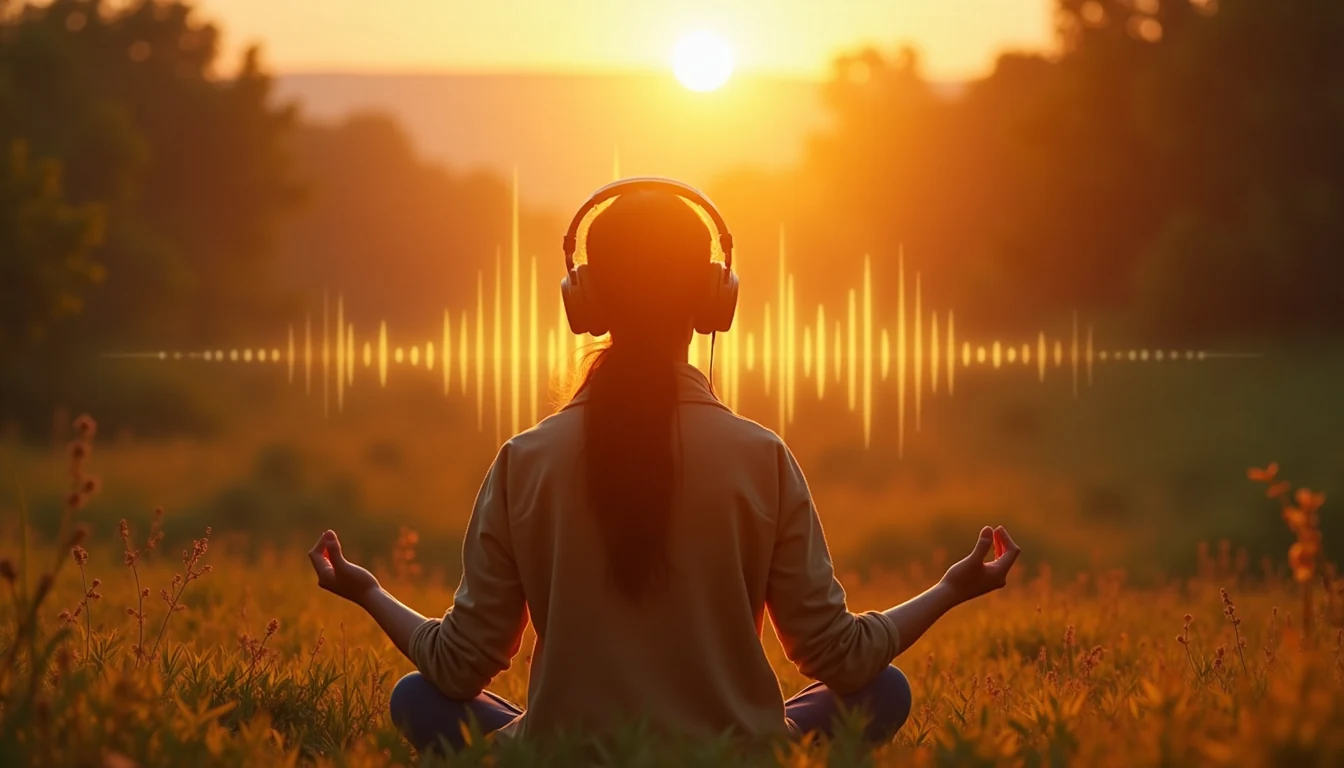
You do not need a dedicated meditation room, but you do need an environment that supports focus. Find a space where you will not be interrupted for at least fifteen minutes. Dim the lights, remove your phone from reach, and wear comfortable clothing. If possible, use over-ear headphones for a more immersive experience.
Step 3: Set an Intention
Before you begin listening, state your intention either silently or aloud. This is not a wish; it is a direction for your subconscious. Examples include: “I am releasing the fear that no longer serves me,” “I am opening myself to positive change,” or “I am reconnecting with my inner wisdom.” The frequency amplifies the intention, and the intention gives the frequency a focus.
Step 4: Listen Actively, Not Passively
You can certainly play solfeggio frequencies in the background while working or sleeping, and there is value in that. But for reprogramming your subconscious, active listening is far more effective. Close your eyes and follow the tone with your attention. Notice where in your body you feel it. Observe the thoughts that arise without judging them. This combination of focused attention and relaxed awareness creates the ideal state for subconscious reprogramming.
Step 5: Journal After Each Session
After listening, spend five minutes writing down whatever came up during your session. Solfeggio frequencies often bring buried thoughts and emotions to the surface, and journaling captures these before they slip back into the subconscious. Over time, patterns will emerge that reveal exactly what your subconscious has been holding.
Solfeggio Frequencies and Subconscious Reprogramming
The subconscious mind stores every experience you have ever had, along with the emotions and beliefs attached to them. Most of your daily decisions are not made by your conscious mind — they are driven by subconscious programs that were written years or even decades ago. This is why willpower alone rarely produces lasting change.
Solfeggio frequencies offer a different approach. Instead of fighting against subconscious resistance, they create conditions where the resistance naturally dissolves. Here is how the process works:
First, the frequency relaxes the critical faculty. Your conscious mind has a gatekeeper — the critical factor — that rejects any information that contradicts your existing beliefs. When you are in a normal waking state, affirmations and positive thinking often bounce off this barrier. But when a solfeggio frequency shifts you into an alpha or theta brainwave state, the critical factor relaxes, and new suggestions can enter the subconscious unchallenged.
Second, the frequency creates emotional resonance. Emotions are the language of the subconscious. A frequency that makes you feel safe, expansive, or joyful is communicating directly with the part of you that controls your behavior. Over time, this emotional resonance rewires the neural pathways that keep limiting beliefs in place.
Third, repetition builds new neural pathways. A single listening session can create a temporary shift, but lasting change requires consistency. When you listen to the same frequency daily for several weeks, you are literally building new neural pathways that support the beliefs and behaviors you want. This is the same principle behind cognitive behavioral therapy, meditation, and habit formation — repetition creates permanence.
Combining Solfeggio Frequencies With Other Practices
While solfeggio frequencies are powerful on their own, their effects multiply when combined with complementary practices. Here are several evidence-backed combinations:
Solfeggio Frequencies and Affirmations
Playing a solfeggio frequency while repeating affirmations is one of the most effective ways to reprogram the subconscious. The frequency opens the door, and the affirmation walks through it. For example, listening to 396 Hz while repeating “I release all fear and trust in my path” creates a dual pathway: the vibration dissolves the emotional charge of fear, while the affirmation plants a new belief in the cleared space.
Solfeggio Frequencies and Breathwork
Conscious breathing amplifies the effect of any frequency practice. Try this simple protocol: play 528 Hz, inhale for four counts, hold for seven counts, and exhale for eight counts. This breathing pattern activates the parasympathetic nervous system, and the frequency reinforces the relaxation response. Within minutes, you will feel a shift that neither practice alone could produce as quickly.
Solfeggio Frequencies and Visualization
Your subconscious cannot distinguish between a vividly imagined experience and a real one. When you combine solfeggio frequencies with guided visualization, you are giving your subconscious a new memory — one that depicts the reality you want to create. Listen to 417 Hz while visualizing yourself successfully navigating a change you have been avoiding, and your subconscious begins to treat that change as familiar rather than threatening.
Solfeggio Frequencies and Yoga Nidra
Yoga nidra, or yogic sleep, is a practice that takes you to the threshold between waking and sleeping — the hypnagogic state where subconscious reprogramming is most effective. Playing solfeggio frequencies during yoga nidra deepens the experience and makes the suggestions embedded in the practice more potent.
Common Mistakes to Avoid
As with any practice, there are pitfalls that can reduce effectiveness or even create discomfort. Being aware of these will save you time and frustration.
Listening at too high a volume. More volume does not mean more benefit. Solfeggio frequencies work through vibration, not intensity. A comfortable listening level — around 40 to 60 percent of your device’s maximum — is ideal. If the tone feels harsh or overwhelming, turn it down.
Expecting instant results. Some people feel an immediate shift, but subconscious reprogramming is a cumulative process. Commit to at least twenty-one consecutive days before evaluating whether a particular frequency is working for you. Your subconscious has had years to build its current patterns; give it time to build new ones.
Using the wrong frequency for your current state. If you are deeply anxious, jumping straight to 963 Hz may feel disorienting rather than expansive. Start with lower frequencies that ground and stabilize, then gradually move upward as you feel more centered.
Listening while multitasking. Background listening has its place, but if your goal is subconscious reprogramming, you need focused attention. Even ten minutes of active listening is more valuable than an hour of passive background play.
Ignoring physical discomfort. If a particular frequency causes headaches, dizziness, or emotional overwhelm, stop and try a different one. Your body is giving you important feedback. Pushing through discomfort does not accelerate healing — it creates resistance.
What Science Actually Says About Solfeggio Frequencies
Honesty matters. While many practitioners report profound benefits from solfeggio frequencies, the scientific evidence is still evolving. It is important to distinguish between what has been established and what remains in the realm of anecdotal experience.
What is well-supported: Sound therapy in general has a robust evidence base. Studies have shown that specific frequencies can reduce anxiety, lower blood pressure, decrease cortisol levels, and improve sleep quality. The mechanism of entrainment is well-documented, and the therapeutic use of sound dates back thousands of years across cultures.
What is plausible but not yet proven: The specific claims tied to individual solfeggio frequencies — such as 528 Hz repairing DNA or 396 Hz specifically releasing guilt — have not been conclusively demonstrated in peer-reviewed studies. These claims are based on historical tradition, numerology, and practitioner experience rather than controlled clinical trials.
What is unlikely: The idea that simply listening to a frequency will magically solve deep psychological issues without any additional effort or professional support. Sound healing is a tool, not a cure. It can create conditions that support healing, but it cannot replace therapy, medication, or the hard work of self-inquiry.
The most responsible approach is to use solfeggio frequencies as one element of a broader healing practice. Combine them with journaling, therapy, movement, and community. Let the frequencies support your journey rather than expecting them to be the entire journey.
A Simple 21-Day Solfeggio Protocol for Subconscious Reprogramming
If you are ready to experience solfeggio frequencies for yourself, here is a structured protocol designed to gently shift your subconscious over three weeks.
Week 1: Grounding and Release (Days 1–7)
Listen to 396 Hz for 15 minutes each morning. Focus on releasing fear, guilt, and self-doubt. Journal any emotions that surface. This week is about clearing space — you cannot plant new seeds in soil that is full of weeds.
Week 2: Change and Transformation (Days 8–14)
Switch to 417 Hz for 15 minutes each morning. Set an intention around one specific change you want to make. Visualize yourself living that change as if it has already happened. This week is about creating momentum.
Week 3: Love and Integration (Days 15–21)
Move to 528 Hz for 15 minutes each morning. Focus on self-love, gratitude, and the new patterns you have been building. Let this frequency integrate the work of the previous two weeks into your daily life.
After the 21 days, you can continue with whichever frequency felt most impactful, or rotate through them based on your daily needs. The key is consistency — even five minutes a day is more valuable than an hour once a week.
Finding Quality Solfeggio Frequency Recordings
Not all solfeggio frequency recordings are created equal. Here are some guidelines for finding ones that are genuinely effective:
- Pure tones vs. layered tracks: Pure sine wave tones deliver the frequency without distraction. Layered tracks that add music, nature sounds, or binaural beats can be pleasant, but they may dilute the frequency’s effect. Start with pure tones and add layers only once you are familiar with how each frequency feels.
- Check the actual hertz: Some recordings labeled as solfeggio frequencies do not actually play at the stated hertz. Use a frequency analyzer app to verify that the track is delivering the tone it claims. The difference between 528 Hz and 527 Hz may seem small, but precision matters in sound healing.
- Length matters: Shorter tracks of five to ten minutes are fine for quick sessions, but the most effective sessions last fifteen to thirty minutes. This gives your brain enough time to entrain to the frequency and for your subconscious to become receptive.
- Headphones vs. speakers: Headphones provide a more direct experience, especially for frequencies in the lower range. Speakers work well for higher frequencies and for creating an ambient sound environment in a room.
Conclusion: Sound as a Gateway to the Subconscious
Solfeggio frequencies are not a magic bullet, but they are a genuine tool for anyone serious about understanding and reshaping their subconscious mind. The beauty of this practice is its simplicity: you do not need special equipment, years of training, or a large budget. You need a willingness to sit with yourself, to listen — truly listen — and to trust that the vibration will do its work if you give it consistent attention.
Your subconscious has been shaped by every sound you have ever heard, from the tone of your parents’ voices to the music that played during your most formative moments. If you want to understand more about how your subconscious patterns work, sound is one of the most effective entry points. It makes sense that carefully chosen sounds can reshape it. Solfeggio frequencies are an invitation to participate consciously in that process, to choose the vibrations that will write the next chapter of your inner story.
Start with fifteen minutes. Start today. The frequency is already waiting.