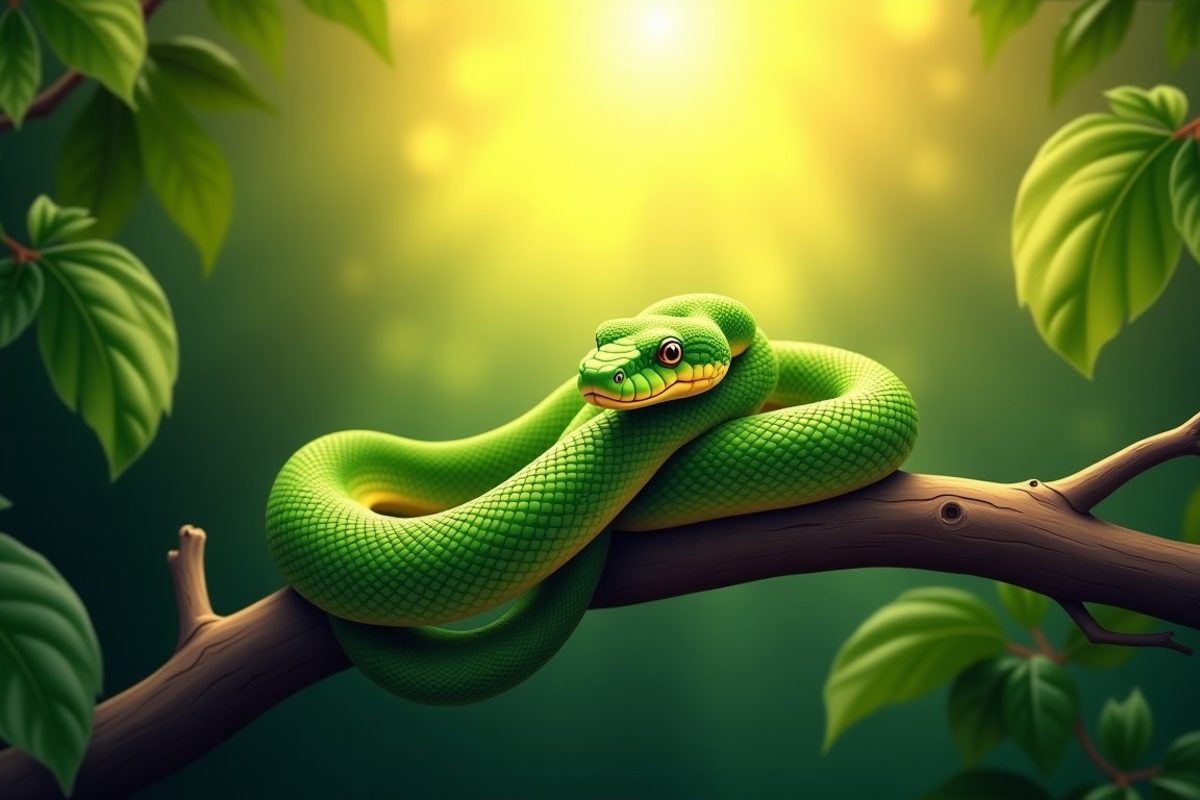
The spiritual meaning of snakes is above all transformation: just as a snake sheds its skin, its appearance is read as a sign that you are outgrowing an old version of yourself, with healing, renewed energy, and hidden knowledge on the other side. Snakes also carry warnings in some traditions, so the meaning depends a great deal on context and on how the encounter made you feel.
No animal provokes stronger reactions than the snake. Some people freeze at the sight of one; others are fascinated. Religions and cultures have cast it as healer and tempter, creator and destroyer, guardian and threat. This guide sorts through those meanings, explains what specific traditions actually say, and looks at what snakes may signify in love, grief, dreams, and as an animal guide. It ends with a practical ritual for working with the snake's message.
What Do Snakes Mean Spiritually?
Across traditions, snake symbolism tends to cluster around a few core ideas:
- Transformation and rebirth. Snakes shed their skin in a process called ecdysis. Before shedding, their eyes cloud over and they become withdrawn; afterward, they emerge brighter. It is one of nature's clearest images of letting go of an old self.
- Healing. From the Greek Rod of Asclepius to the bronze serpent of the Hebrew Bible, snakes are tied to medicine, partly because venom can both harm and, in controlled forms, heal.
- Life force and energy. In yogic and tantric traditions, a coiled serpent represents dormant spiritual energy waiting to rise.
- Cycles and eternity. The ouroboros, a snake swallowing its own tail, symbolizes endless renewal and the cycle of life and death.
- Hidden knowledge and danger. Snakes live close to the earth and often out of sight. They represent what is hidden, including wisdom, temptation, and fear.
Why snakes affect us so strongly
There is a scientific angle to this. Anthropologist Lynne Isbell proposed the "snake detection theory" (2006), arguing that the threat of snakes helped shape primate vision. In a study by Vanessa LoBue and Judy DeLoache (2008), young children picked out images of snakes among other objects faster than they found flowers or frogs. Psychologists Arne Öhman and Susan Mineka (2001) described a readiness in humans to learn fear of snakes quickly. This helps explain why a snake sighting feels so charged: your body reacts before your mind has time to interpret. That intensity is part of why snakes became such powerful symbols.
Snakes in Cultural and Religious Traditions
Snake symbolism is everywhere, and it differs a great deal from place to place. Here is what specific traditions say.
Hinduism: nagas, Shesha, and kundalini
Hindu tradition holds snakes in deep reverence. Nagas are semi-divine serpent beings linked with water, fertility, and the underworld. Vishnu rests on the cosmic serpent Shesha (also called Ananta, "endless"), and Shiva wears the serpent Vasuki around his neck. In the story of the churning of the ocean (Samudra Manthan), Vasuki serves as the rope that gods and demons use to churn the cosmic sea. During the festival of Nag Panchami, many devotees offer milk and prayers to snake images or living snakes. In yogic and tantric thought, kundalini is described as energy coiled like a serpent at the base of the spine; spiritual practice is said to awaken it and draw it upward through the chakras. If this interests you, the chakra balancing guide explains the energy centers it is said to pass through.
Buddhism: Mucalinda the protector
In Buddhist tradition, while the Buddha meditated after his awakening, a great storm arose. The naga king Mucalinda coiled beneath him and spread his hoods over his head to shield him from the rain. Statues of the Buddha seated on a coiled serpent with a hood of snake heads above him, common in Thailand, Cambodia, and Laos, depict this story. Here the snake is a guardian of spiritual practice.
Ancient Egypt: the uraeus and Apep
Egyptian symbolism shows both faces of the snake. The uraeus, a rearing cobra associated with the goddess Wadjet, appeared on the pharaoh's crown as a sign of royal power and divine protection. At the same time, Apep (Apophis) was a vast serpent of chaos who tried each night to swallow the sun god Ra as he traveled through the underworld. One of the earliest known images of the ouroboros also comes from Egypt, in a funerary text found in the tomb of Tutankhamun.
Greek tradition and the symbol of medicine
Asclepius, the Greek god of healing, carried a staff with a single snake coiled around it. The Rod of Asclepius remains a symbol of medicine today, including on the flag of the World Health Organization. It is often confused with the caduceus, the winged staff with two snakes carried by Hermes, which is associated with commerce and messengers. Greek myth also features Python, the serpent that guarded Delphi before Apollo slew it and the site became home to his oracle.
The Hebrew Bible and Christianity
In Genesis, the serpent in the Garden of Eden persuades Eve to eat from the tree of the knowledge of good and evil, which is why many Christians associate snakes with temptation and deception. Yet in the Book of Numbers (21:8-9), Moses makes a bronze serpent on a pole, and those bitten by snakes are healed by looking at it. The same tradition holds both meanings: the snake as danger and the snake as the image of healing.
Mesoamerica: the feathered serpent
Quetzalcoatl, the feathered serpent of the Aztecs, and Kukulkan, his Maya counterpart, were major deities associated with wind, learning, and the joining of earth and sky. At Chichen Itza, the pyramid of El Castillo is built so that around the spring and autumn equinoxes, the late-afternoon light casts a shadow that looks like a serpent descending the steps toward a carved snake head at the base.
Aboriginal Australia: the Rainbow Serpent
The Rainbow Serpent is one of the most important figures in many Aboriginal Australian traditions, connected with water, creation, and the shaping of the land. It is not a single figure with one name; different nations have their own beings and stories, such as Ngalyod in parts of western Arnhem Land and the Waugal (Wagyl) of the Noongar people of southwestern Australia. These are living traditions, and their sacred details belong to the communities that hold them.
The Hopi Snake Dance
The Hopi people of Arizona have long held a Snake Dance as part of a ceremony that prays for rain. In the ceremony, snakes are treated as messengers that carry prayers to the spirits of the underworld before being released. The ceremony is sacred and is now generally closed to outsiders, which is a reminder that not every tradition is meant for public use.
Chinese zodiac
The Snake is the sixth animal of the Chinese zodiac and is associated with wisdom, intuition, elegance, and careful strategy. The most recent Year of the Snake began in late January 2025.
Spiritual Meaning of Snakes in Love
A snake appearing while you think about love can be read in two directions, and honesty about which applies matters:
- Transformation in a relationship. A relationship may be shedding an old phase, such as early infatuation giving way to deeper commitment, or old roles being renegotiated. Growth can feel uncomfortable at first, like the snake's cloudy-eyed period before it sheds.
- Passion and life force. Through its link with kundalini and fertility, the snake is often connected with sexual energy and vitality.
- A warning about trust. In some interpretations, the snake points to deception. If you have a nagging feeling that something is off, the snake may be asking you not to dismiss it.
Ask yourself which meaning your gut responds to. The snake does not decide anything for you. It sharpens what you already sense.
Snakes and Grief
Snakes are rarely the first animal people associate with loved ones who have died, but they do carry meaning in grief. Because they are tied to rebirth and the cycle of life, the ouroboros in particular, a snake can be a reminder that death is part of a larger cycle. Grief itself is a kind of shedding: the life you had with someone ends, and you slowly grow into a different shape. If a snake crosses your path during mourning, you might take it as permission to let your grief change you rather than trying to stay exactly as you were.
Dreaming of Snakes
Snakes are among the most common animals in dreams, and their meaning depends heavily on what happens and how you feel. Some frequent scenarios:
- A snake shedding its skin: a clear sign of transformation and leaving an old identity behind.
- A snake biting you: a wake-up call, a painful truth, or a situation that has been "poisoning" you. It can also point to sudden healing or insight.
- Being chased by a snake: avoiding something that needs facing, often a fear or a change.
- A snake in your house: something hidden in your personal life or family coming to the surface.
- A calm snake coiled near you: stored energy, patience, or a protective presence.
- Killing a snake: overcoming a fear or obstacle, or suppressing something that wants to change.
- A white or golden snake: often read as spiritual awakening, purity, or healing.
Write down the dream and your emotional state right away. Fear points toward what you are resisting; calm or fascination often points toward a change you are ready for. For more on reading dream imagery, see the language of dreams.
The Snake as a Spirit Animal
People drawn to snakes often go through repeated cycles of reinvention. As an animal guide, the snake represents:
- Willingness to change. The snake does not cling to an outgrown skin. It is a guide for career changes, healing after loss, and spiritual growth; spiritual awakening stages describes this kind of process in detail.
- Healing ability. Many healers, therapists, and caregivers feel a kinship with the snake.
- Patience and timing. Snakes wait, then move decisively.
- Comfort with the hidden. The snake helps you look at buried emotions and parts of yourself you usually avoid. Shadow work prompts pair well with this energy.
The shadow side of snake energy includes secrecy, coldness, and striking out when cornered. Working with the snake means learning to transform without becoming defensive. A respectful note: "spirit animal" comes from specific Indigenous practices, and many people use animal guide or totem symbol for their own reflection. The spirit animal guide explains this. If other creatures of transformation keep appearing, the frog shares the snake's theme of renewal, and the spider adds patience and the weaving of a new pattern.
What to Do When You See a Snake
First, safety. If you encounter a snake outdoors, give it space and let it move away. Do not try to handle it. Most snakes avoid people when they can. Once you are at a comfortable distance, you can reflect on the encounter:
- Notice your reaction. Fear, curiosity, awe, disgust? Your reaction tells you how you feel about change right now.
- Notice the details. Was the snake moving, resting, shedding? What color was it? Where did it appear: your path, your garden, your home?
- Ask what you are outgrowing. A role, a habit, a relationship pattern, a belief about yourself?
- Ask what needs healing. Is there a wound you have been ignoring?
- Write it down. Date, place, your reaction, and your answers. Patterns become visible over time.
A shedding ritual
Here is a simple ritual inspired by the snake's renewal:
- On a piece of paper, write down one thing you are ready to let go of: a habit, a fear, an old story about yourself.
- Below it, write what you want to grow into, in one sentence.
- Sit quietly for a few minutes and breathe slowly, imagining the old layer loosening.
- Tear off the top half with the old item and dispose of it safely, by tearing it into pieces or recycling it.
- Keep the bottom half somewhere you will see it for the next month.
Like a snake, you may feel tired, irritable, or withdrawn before a change. That is normal. Give yourself the quiet time a snake takes before it sheds.
A Grounded Perspective
Snakes are common in many parts of the world, especially in warm weather, and seeing one is often simply a sign that you are near good snake habitat. A snake sighting does not predict betrayal or guarantee transformation. Its value lies in the reflection it prompts. The snake's message, across traditions, is that endings and beginnings are bound together, and that letting go of an old skin is how growth happens.
Frequently Asked Questions
What does it mean when a snake crosses your path?
A snake crossing your path is most often read as a sign of transformation, a call to let go of something you have outgrown. In some interpretations it is also a warning to pay attention to a situation you feel uneasy about. Your own emotional reaction is the best clue to which meaning fits.
Is seeing a snake a good or bad omen?
It depends on the tradition. In Hinduism and Buddhism snakes are often protective and sacred, while some Christian interpretations link them to temptation. Most modern spiritual readings see the snake as a sign of transformation and healing rather than a bad omen.
What does it mean to dream about snakes?
Snake dreams often point to transformation, hidden fears, or something that needs healing. A snake shedding its skin suggests leaving an old identity behind, while being chased can mean avoiding a necessary change. The emotion you felt in the dream is the most important guide.
What does a snake symbolize in love?
In love, a snake can symbolize passion and transformation, such as a relationship moving into a deeper phase. In some readings it is a caution about trust. Ask yourself whether the encounter felt energizing or uneasy to know which applies.
What is the connection between snakes and kundalini?
In yogic and tantric traditions, kundalini is described as spiritual energy coiled like a serpent at the base of the spine. Practice is said to awaken this energy so it rises through the chakras. This is why snakes are often associated with spiritual awakening and life force.
What does the ouroboros mean?
The ouroboros is a snake swallowing its own tail, symbolizing endless cycles, renewal, and the unity of beginnings and endings. One of the earliest known images comes from a funerary text found in Tutankhamun's tomb, and the symbol later became important in Greek and alchemical thought.